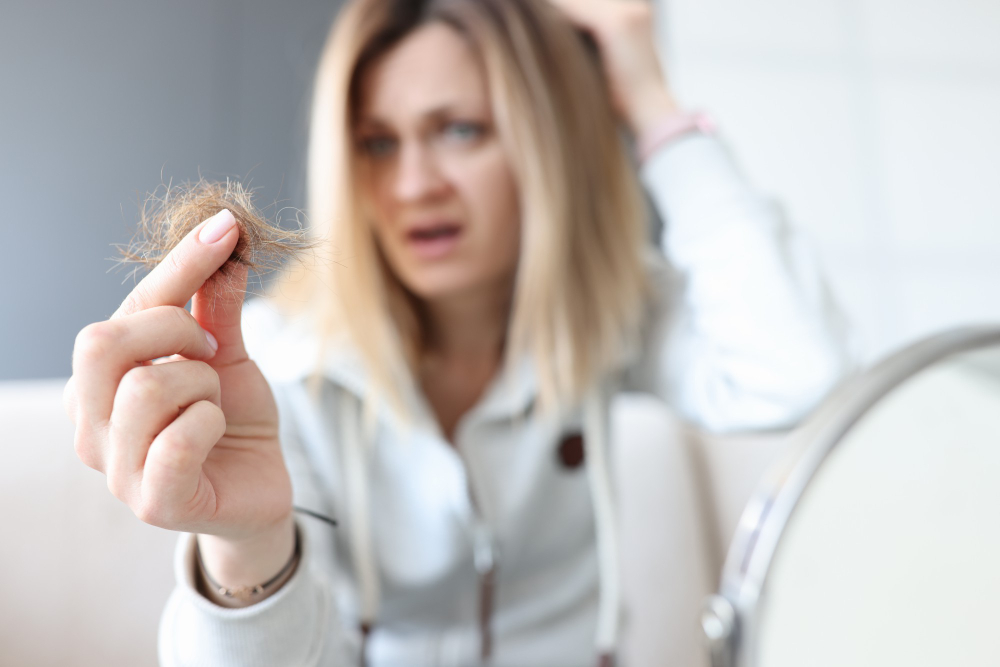
Unlike men, whose hair loss usually starts with a receding hairline or bald spots on the crown, women typically notice thinning primarily on the top of the scalp. Their hair parts may widen, making the scalp more visible unless hair is styled carefully. Hair loss in women typically emerges in their 50s or 60s but can happen earlier.
Request an AppointmentCauses of Hair Loss in Women
To identify the root cause of hair loss, a skilled physician will gather a detailed medical history and conduct a thorough exam. Blood tests may help uncover underlying conditions contributing to hair loss. Once diagnosed, a tailored treatment plan can be created based on the cause, severity, and location of hair loss. Treatment options might include medications, light therapies like laser or ultraviolet treatments, or surgical hair restoration.

Hormonal Changes
Hair loss in women often coincides with significant hormonal shifts, such as postpartum months or menopause. Postpartum hair loss tends to be temporary and resolves over time.
Request an AppointmentTraction Alopecia
Improper hair care practices can lead to hair loss in girls and women. Styles that pull hair tightly into rollers or certain hairstyles, combined with harsh chemical treatments, can damage the scalp and cause permanent hair loss.
Alopecia Areata
This condition causes round patches of hair loss and is believed to be an autoimmune disorder with genetic links.
Androgenetic Alopecia
Known as male-pattern baldness, androgenetic alopecia affects women too. It is commonly inherited but influenced by hormones and aging.
Telogen Effluvium
During the telogen phase of hair growth, hairs naturally shed to make way for new growth. Stress or trauma can prematurely push hairs into this resting phase, resulting in excessive shedding.
Other Causes of Hair Loss in Women
Women may also experience hair loss due to various other reasons, which may be temporary or treatable once the underlying cause is addressed. These include:
- Fungal scalp infections
- Severe illnesses or high fevers
- Poor nutrition or eating disorders
- Certain medications
- Trichotillomania, the compulsive urge to pull out hair
- Thyroid or pituitary gland disorders
- Skin conditions like eczema or psoriasis
- Autoimmune diseases such as lupus
- Chemotherapy or radiation therapy
Treatment of Hair Loss in Women
Treatment varies based on the cause, amount, and location of hair loss. Options include medications like Minoxidil, medicated shampoos, light therapies, and surgical hair transplants. Many women choose to manage minor hair loss with wigs or stylish head coverings.